This is where every R3 student starts, and it is the course our National Jewellery Award winners came through. Over 3.5 months you learn to design jewellery on paper — proportion, stone facets, pencil and colour shading, gold texture, and then the pieces themselves: rings, jhumkas, chandbalis, kadas, bracelets and polki necklaces. You finish with a portfolio of your own designs rather than a certificate alone.
Most people who enquire want to jump straight to CAD. We ask them not to, and the reason is practical rather than traditional. A designer who has never drawn a setting by hand will build models that look correct on screen and fail at the bench — prong heights that shear off, galleries that trap polish, shanks that break at the solder joint. The caster sends the file back and nobody can explain why.
Drawing teaches you what metal and stone will tolerate. Once you have that, the software is a few weeks of learning where the buttons are. It does not work the other way round. Students who finish here usually move on to CAD Rhino or Procreate, and they get through those courses faster than students who started with software.
| Class format | Live online, taught in real time — not pre-recorded video |
|---|---|
| Batch size | Maximum 5 students per batch |
| Schedule | 3 classes a week |
| Recordings | Every class recorded and yours to keep — lifetime access |
| Doubt clearing | Dedicated doubt-clearing session included |
| Total duration | 3.5 months |
| What you need | Paper, pencils and colour pencils. No computer required |
| Included | Jewellery designing kit worth ₹3,000, free for a limited period |
| Fee | ₹12,700 + 18% GST (₹14,986). EMI available |
| On completion | Certificate, plus placement and freelancing assistance |
Complete beginners, mostly. You do not need an art background or a design degree — the course starts at basic shapes and stone facets. It also suits jewellers and retail staff who can already recognise a good piece but cannot draw one, and people planning to start their own label who need to communicate a design to a karigar without ambiguity.
Everything above describes the online course. If you are in Kolkata and would rather learn in a room with the mentor, the same syllabus runs in person as manual jewellery designing in Kolkata, over 3 months. Students who want to make the pieces themselves rather than hand the design to a karigar often add handmade jewellery designing afterwards.
Manual design is taught by Suparna Pattanayak Maity, who joined R3 as a student, won Student of the Year at the National Jewellery Awards 2025, and now teaches here. The academy is led by Rayala Rahul Rao, a GIA Graduate Gemologist and Diamond Graduate with 13+ years in the trade. You can see the full teaching team, or the work students have produced.
Course Fee: ₹12,700 + 18% GST (Total: ₹14,986)
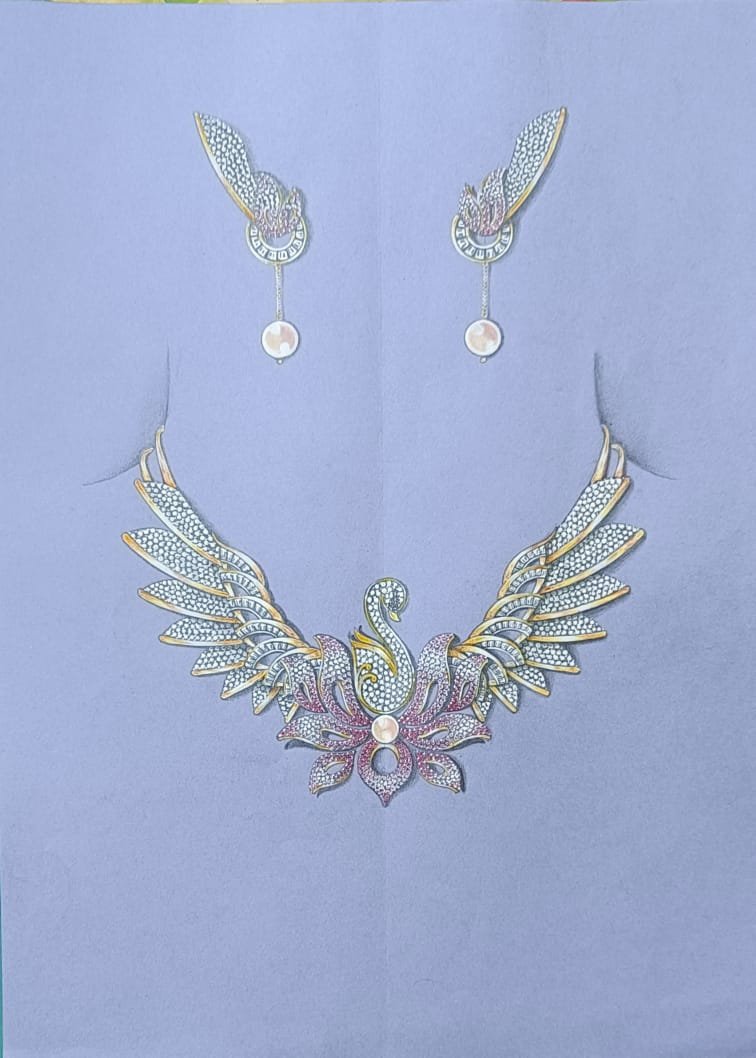

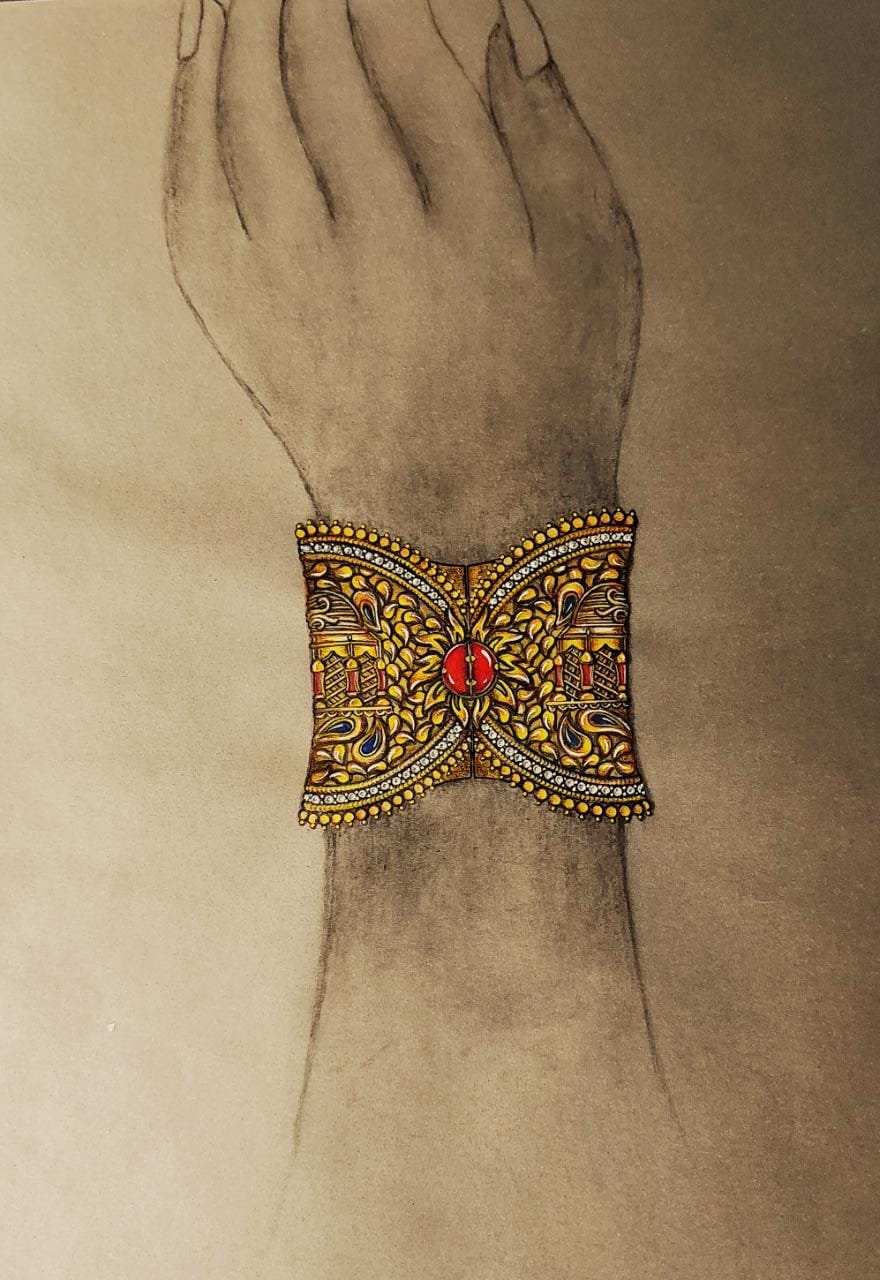
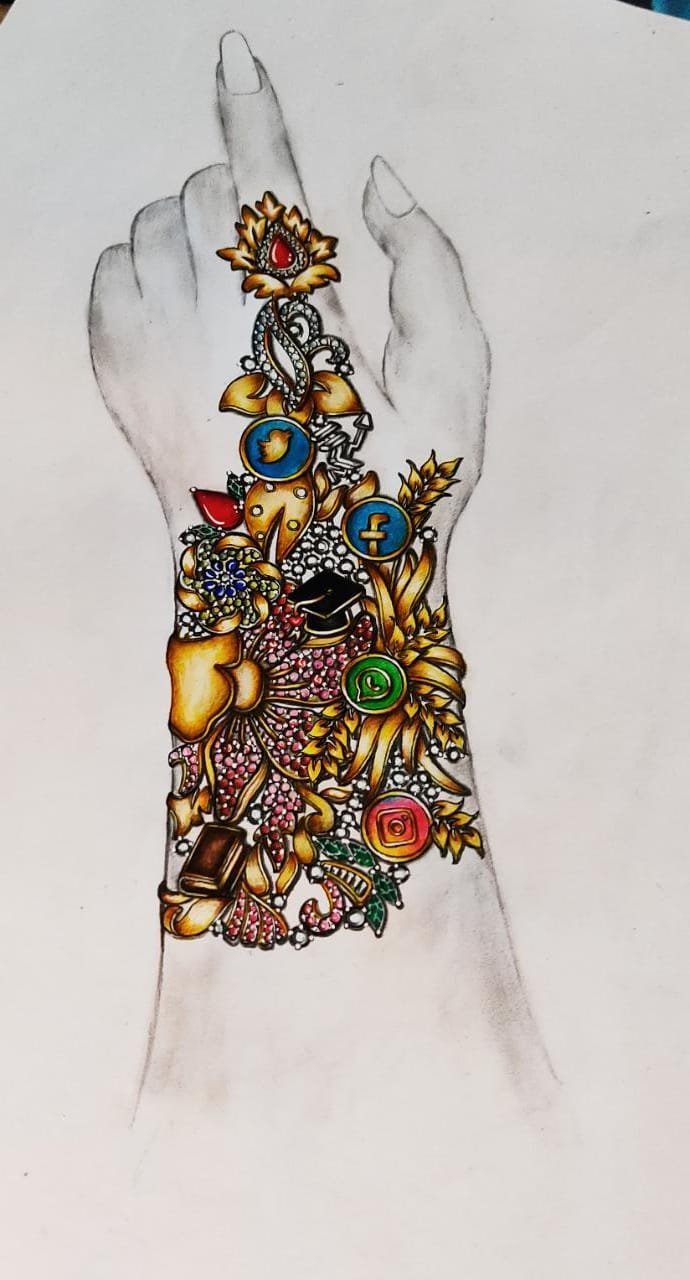
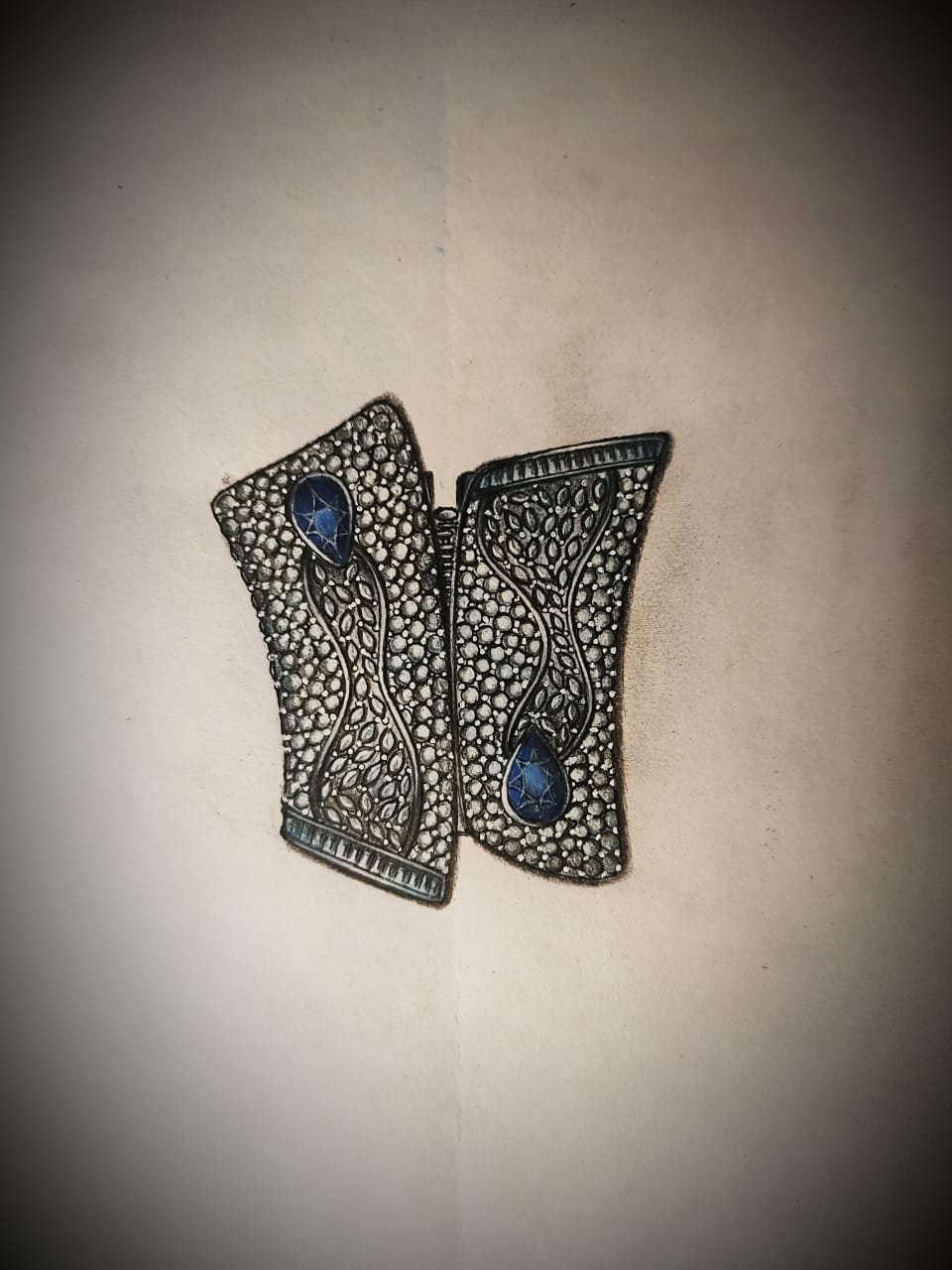
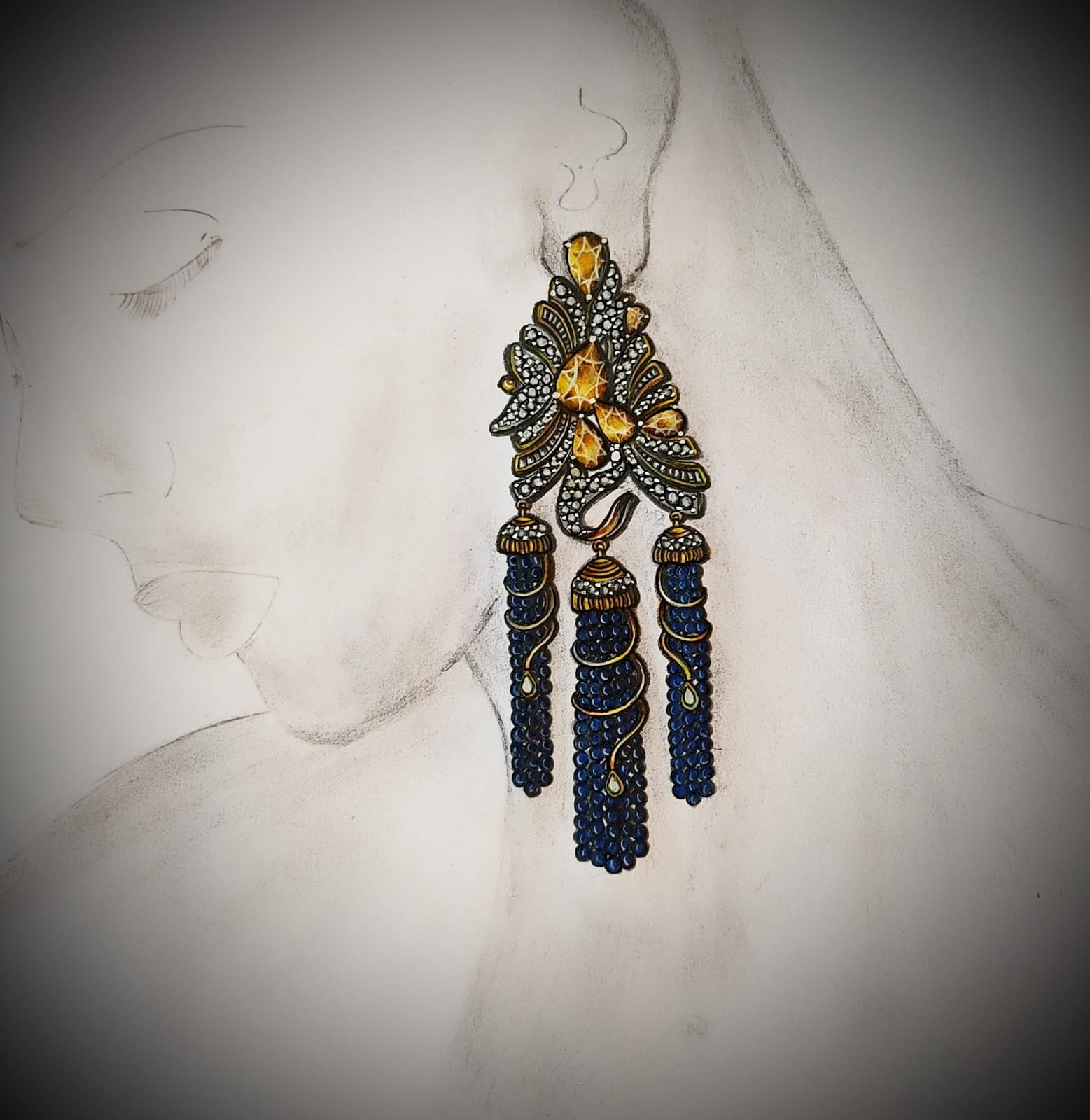
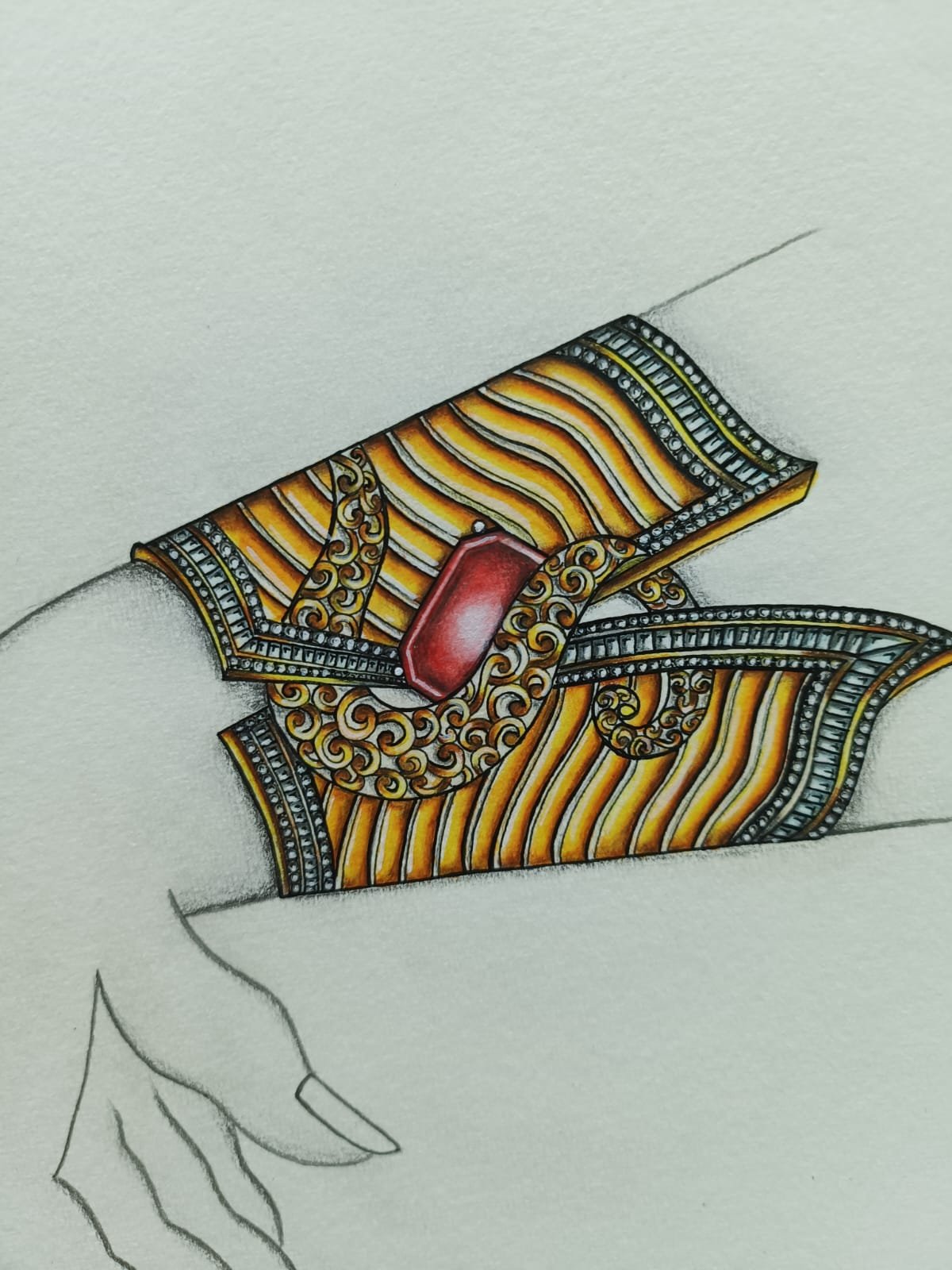
These are hand-drawn illustrations created in class — step-by-step exercises on paper that build your rendering speed, precision, and gemstone realism.

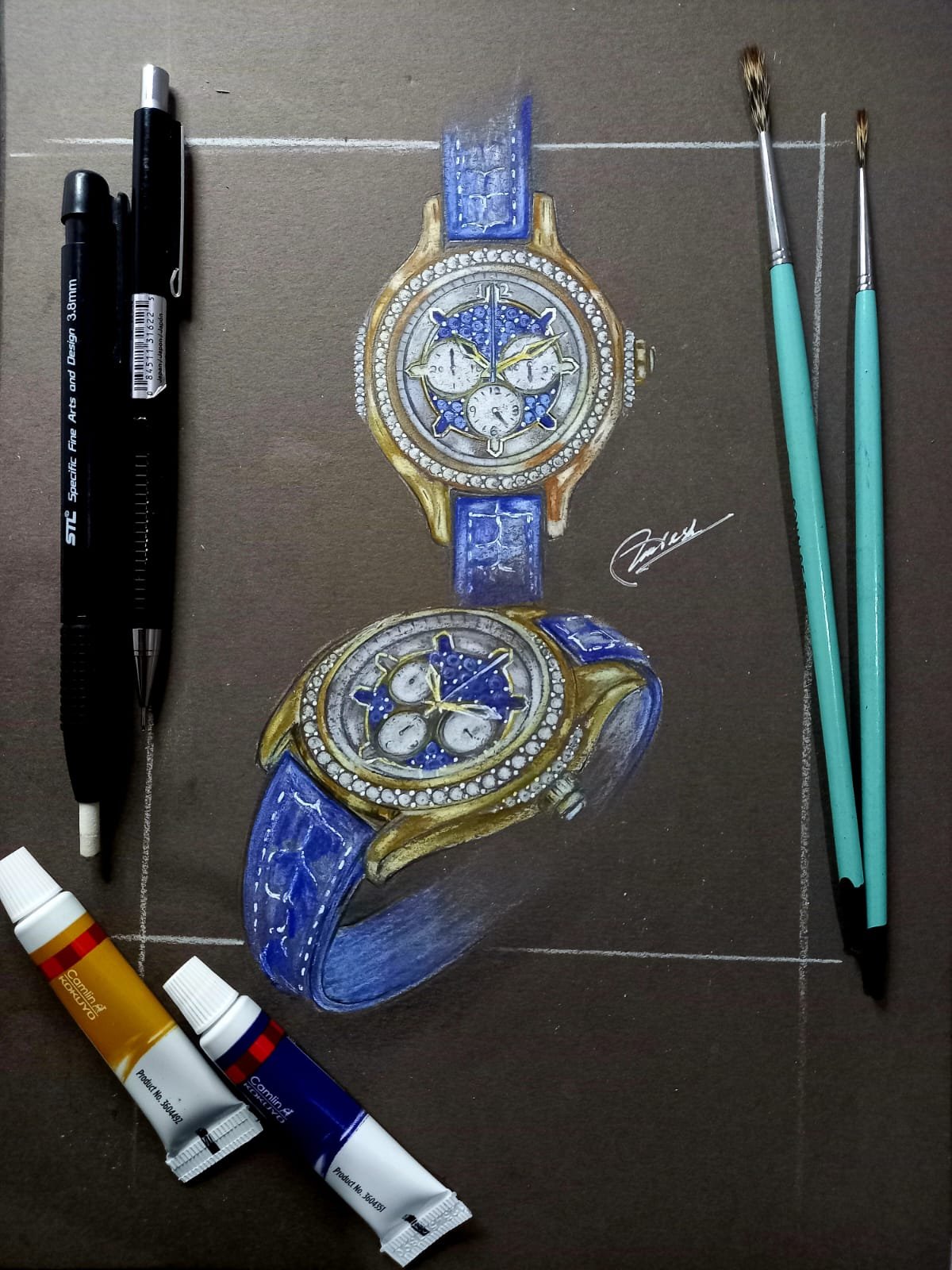
Every student receives a professional jewellery designing kit worth ₹3,000 delivered to their doorstep. It contains specialised pencils, precision templates, gouache colours, brush sets, and custom sketching paper crafted specifically for jewellery rendering.
Hand-drawing builds an intuitive understanding of scale, weight, and metal tolerances that software cannot replicate. When you sketch a prong or a gallery on paper, you learn how a karigar will execute it at the bench.
That is why R3 students move faster, communicate clearer with manufacturers, and build portfolios that win national awards.

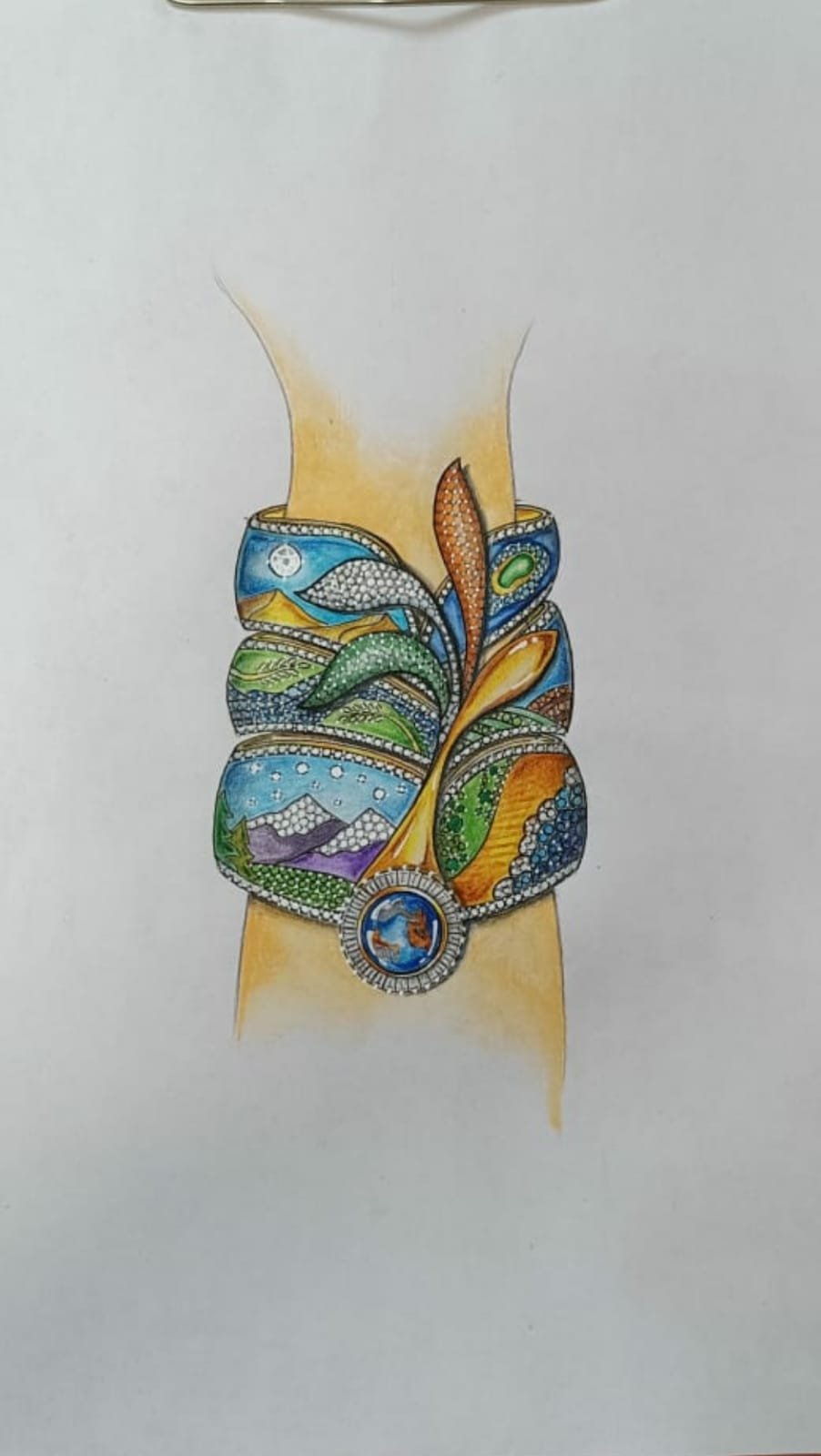
Every piece below was hand-drawn and painted on paper by R3 Jewel Academy students during their manual course.


Everything you need to know about our manual jewellery designing course
Yes, and most students do. The first phase is basic shapes, stone facets and pencil shading — it assumes you have never drawn a piece of jewellery. With five students to a batch, the mentor can see your sheet and correct your hand directly, which is the part that gets people past the first fortnight.
Nothing beyond paper and pencils. The jewellery designing kit worth ₹3,000 is included in the fee for a limited period, and there is no software or computer requirement — this course is drawn by hand throughout.
You leave with a portfolio and a certificate, and with placement and freelancing assistance behind it. Graduates work as designers in production houses, with retailers and manufacturers, or freelance. Many go on to CAD Rhino to add 3D modelling, and R3 students can enter national and international design competitions after the course — which is how four consecutive years of National Jewellery Award wins started.
Every session is recorded and stays yours to rewatch, with a dedicated doubt-clearing session for anything the recording does not answer.
Copyright © 2020 R3 Jewel Academy