
A Timeless Art with Modern Relevance
Jewellery has long been regarded as one of the most personal and cherished forms of art, and behind every exquisite piece lies a meticulous design process. Manual jewellery designing, often referred to as the traditional method of jewellery creation, plays a fundamental role in this process. Unlike digital jewellery design, which relies heavily on technology, manual design focuses on hand-drawn sketches and detailed drafts to bring jewellery ideas to life.
In an era where technology dominates nearly every field, manual jewellery designing remains relevant due to its ability to capture a designer's true creativity and attention to detail. It's a process that blends art, precision, and craftsmanship, allowing designers to infuse their personal touch into each creation. This article explores the core concepts of manual jewellery design, its practical applications, hands-on working processes, and why learning this skill is essential for aspiring designers, especially at R3 Jewel Academy.
The Core of Manual Jewellery Designing
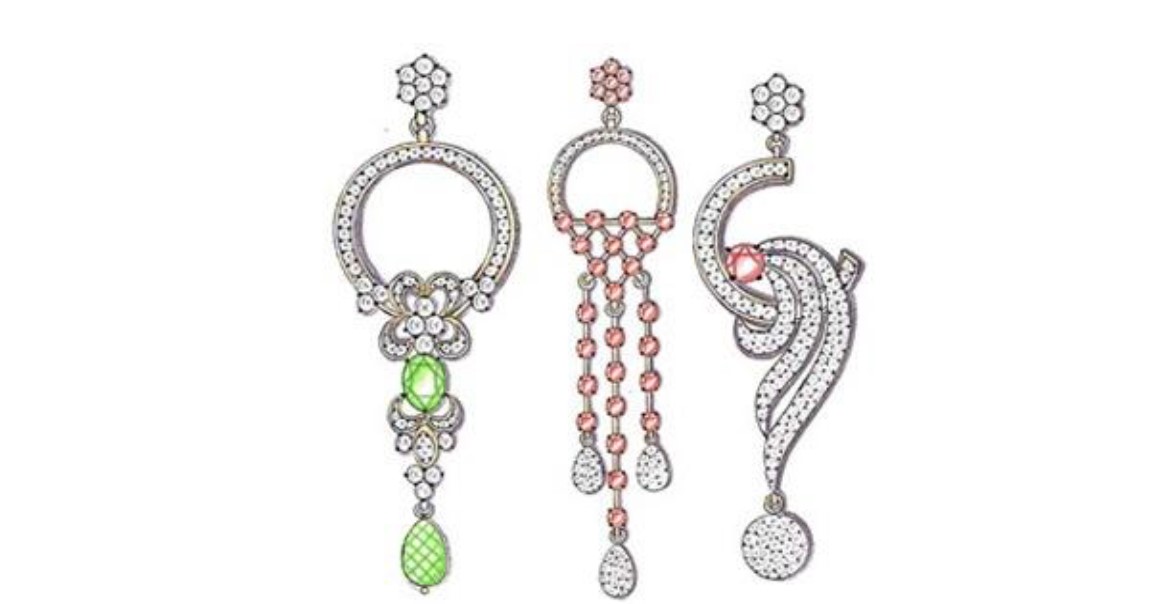
Manual jewellery designing begins with a simple sketch on paper. It may seem like a rudimentary step, but this sketch serves as the foundation for the entire design process. The designer visualizes a concept, using pencils, markers, or watercolors to create detailed, hand-drawn designs of jewellery pieces. This stage requires immense focus, as designers work on capturing proportions, symmetry, textures, and intricate details.
One of the key advantages of manual design is its flexibility. The designer can make quick adjustments to a drawing, changing the curve of a ring, modifying the arrangement of gemstones, or refining the overall structure. The process of drawing by hand often enables designers to be more expressive and experimental, leading to unique designs that may not be easily achieved through digital tools.
Additionally, manual designing helps improve a designer’s observational skills, encouraging them to study jewellery pieces and fine details more closely. Through practice, designers develop an eye for understanding how different elements—such as metal, gemstones, and shapes—work together harmoniously.
Practical Applications of Manual Jewellery Design
Manual jewellery design is not only a tool for creativity but also plays an essential role in the actual production process of jewellery. Before a piece can be crafted in a workshop or a factory, a detailed manual sketch is often used to communicate the design to artisans and manufacturers. This is particularly important for complex, custom-made jewellery or culturally significant pieces.
1. Bespoke Jewellery Design
Manual designing is widely used in bespoke jewellery creation. When a client requests a custom piece, such as an engagement ring or a family heirloom, the designer begins by sketching several ideas based on the client’s preferences. This gives both the client and designer a tangible representation of what the finished product will look like before it is created. Since the design is hand-drawn, the client can provide feedback, and the designer can quickly make changes, offering multiple iterations until the perfect design is achieved.
For instance, an engagement ring design might start with a classic solitaire sketch. The client may request modifications, such as altering the shape of the diamond, adding smaller accent stones, or adjusting the band style. With manual design, these changes can be incorporated easily, ensuring that the final product meets the client’s exact specifications.
2. Traditional Jewellery
Manual design is also integral to traditional and cultural jewellery, such as Indian temple jewellery, jadau pieces, or Mughal-inspired designs. These types of jewellery require intricate detailing, which can only be perfected through manual sketches. Designers often collaborate closely with artisans to translate these hand-drawn designs into masterpieces, ensuring that each curve, motif, and embellishment carries cultural significance.
For example, a designer might sketch a polki necklace with an emphasis on traditional floral patterns, then work with an artisan to bring the piece to life using centuries-old techniques.
Hands-on Working: Bringing Designs to Reality
The transition from sketch to finished product involves several stages, and hands-on work is crucial in ensuring that a jewellery design is not only beautiful but also structurally sound. Designers often start with wax carving or metal shaping, which allows them to create prototypes of their designs before the final piece is produced. These models provide valuable insights into how the jewellery will look and function in three dimensions.
For instance, a designer may carve a ring out of wax to see how the proportions look when worn on a finger. They may adjust the width of the band or the height of the gemstone setting, ensuring that the piece is comfortable to wear while maintaining its aesthetic appeal. Working with physical models also helps designers experiment with various materials, such as gold, silver, or platinum, and see how they interact with gemstones like diamonds, emeralds, or sapphires.
At R3 Jewel Academy, students are given extensive hands-on experience to work through each stage of jewellery creation, from sketching and prototype development to final execution. Workshops on materials, techniques, and trends allow students to practice and refine their skills in a real-world setting.
Why Choose R3 Jewel Academy for Manual Jewellery Designing?
At R3 Jewel Academy, we understand that the best way to master the art of jewellery design is through hands-on experience. Our Manual Jewellery Designing course is structured to provide in-depth knowledge and practical skills, allowing students to work on a wide range of projects that challenge and enhance their creativity.
Our academy offers a holistic approach to manual jewellery designing, with industry experts guiding students through each stage of the design process. From understanding the basics of sketching to experimenting with prototypes and materials, students are trained to become proficient in both traditional and contemporary design methods.
With a strong focus on the latest trends, as well as timeless techniques, R3 Jewel Academy ensures that graduates are well-equipped to enter the jewellery industry with confidence. Whether you're interested in bespoke jewellery design, traditional styles, or contemporary trends, R3 Jewel Academy will help you turn your passion into a profession.
Manual Design vs CAD: Do You Still Need to Learn by Hand?
With CAD software everywhere, it's fair to ask whether hand-drawing still matters. It does — and the two are complementary rather than competing. Manual designing trains your eye for proportion, balance, and detail, and lets you explore ideas quickly and expressively before committing them to software. CAD then takes those ideas and turns them into precise, production-ready models. Designers who can do both are consistently more versatile: they can sketch a concept for a client on the spot, then engineer it for manufacture. That is why we teach manual designing as the foundation, and why it pairs naturally with our CAD and rendering courses.
How long it takes to get competent
Manual jewellery designing at R3 runs three months — 72 hours of live instruction, three classes a week at two hours each, with no more than five students in the batch. That size matters more than it sounds. Hand drawing is corrected over your shoulder, one sketch at a time, and that does not happen in a room of forty.
The fee is ₹12,700 plus 18% GST and includes a jewellery designing kit worth ₹3,000, since this is the course where you actually need pencils, paper and colour media in your hands. Every class is recorded and stays yours permanently, which matters when you are trying to recall how a particular gemstone was shaded three weeks ago.
You finish with a certificate and, more usefully, a portfolio of your own hand-drawn designs across rings, earrings, pendants, bangles and necklace sets — including the traditional Indian pieces that make up most of what actually sells. See the full manual designing syllabus for the phase-by-phase breakdown.
Frequently Asked Questions
Is manual jewellery designing still relevant in the age of CAD?
Yes. Manual designing builds the core skills — proportion, form, and detail — that make
CAD work stronger, and it remains essential for bespoke and traditional pieces where hand-drawn
concepts guide artisans.
Do I need to be able to draw before I start?
No. A good manual designing course begins with sketching fundamentals, so beginners can build the
skills step by step.
What can I do after learning manual jewellery design?
You can work as a jewellery designer, take bespoke and custom-design commissions, or use it as the
foundation before advancing into CAD, sculpting, and rendering for a full professional skill set.
Join us at R3 Jewel Academy and take your first step toward becoming a jewellery design expert!
View Course Details